The Science Behind the Mushroom Experience
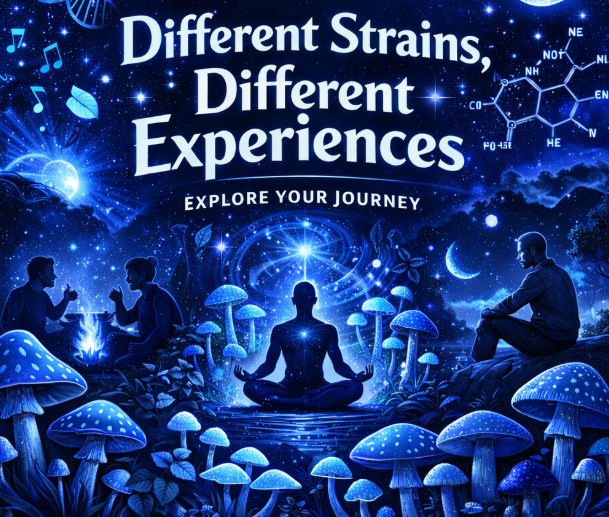
What actually happens in the brain during a mushroom experience? This guide explores the science behind psilocybin, how it interacts with the brain, and why these experiences can feel so unique.
The Science Behind the Experience
Many people describe mushroom experiences as deeply meaningful, creative, or introspective. But what’s actually happening in the brain during that experience?
The answer begins with a naturally occurring compound called psilocybin.
Understanding the science behind it can help explain why these experiences can feel so unique.
What Is Psilocybin?
Psilocybin is a natural compound found in certain species of mushrooms.
When consumed, the body converts psilocybin into another compound called psilocin. This is the molecule that interacts with the brain and influences perception, mood, and cognition.
Psilocin works by interacting with serotonin receptors, which are part of the brain’s system for regulating mood, emotions, and perception.
Because of this interaction, the brain begins to process information in new and unusual ways.
How It Affects the Brain
One of the most fascinating discoveries from neuroscience research is that psilocybin temporarily changes how different regions of the brain communicate with each other.
Normally, the brain operates through structured networks that control things like:
• decision making
• memory
• sensory processing
• self-awareness
During a mushroom experience, these networks become less rigid, allowing areas of the brain that don’t usually communicate to connect more freely.
This increased communication is believed to be one reason people report:
• enhanced creativity
• new perspectives
• emotional insights
• stronger connections to music, art, or nature
In simple terms, the brain becomes more flexible in how it processes information.
Why Visuals and Sensory Changes Happen
The visual effects people report are linked to activity in the visual cortex, the part of the brain responsible for processing what we see.
Psilocin increases communication between sensory regions of the brain, which can create:
• flowing patterns
• enhanced colors
• geometric shapes
• shifting textures
The brain essentially begins to interpret sensory input in a more fluid and imaginative way.
- The Role of Set and Setting
While brain chemistry plays a major role, science also shows that environment and mindset strongly influence the experience.
Researchers often refer to this as “set and setting.”
• Set refers to your mindset, mood, and expectations.
• Setting refers to the environment, surroundings, and people around you.
These factors can significantly shape how the brain interprets the experience.
Why Experiences Feel Different for Everyone
Another interesting aspect of mushroom experiences is that no two journeys are exactly the same.
This happens because every person has:
• different brain chemistry
• different life experiences
• different emotional states
All of these factors influence how the brain processes the effects of psilocybin.
That’s why one person might describe an experience as creative and energizing, while another experiences deep introspection.
The Growing Interest in Research
In recent years, researchers around the world have been studying psilocybin more closely to better understand its effects on the brain.
Scientists are exploring how it influences:
• emotional processing
• neural connectivity
• perception and awareness
As research continues, we’re learning more about how these compounds interact with the brain and why the experiences they create can feel so powerful.
Knowledge Enhances the Journey
At ShroomTopia, we believe that understanding the science behind the experience helps people explore with more intention and awareness.
The more you understand how the brain works, the easier it becomes to approach these experiences with curiosity, respect, and preparation.
Because every journey begins with knowledge.